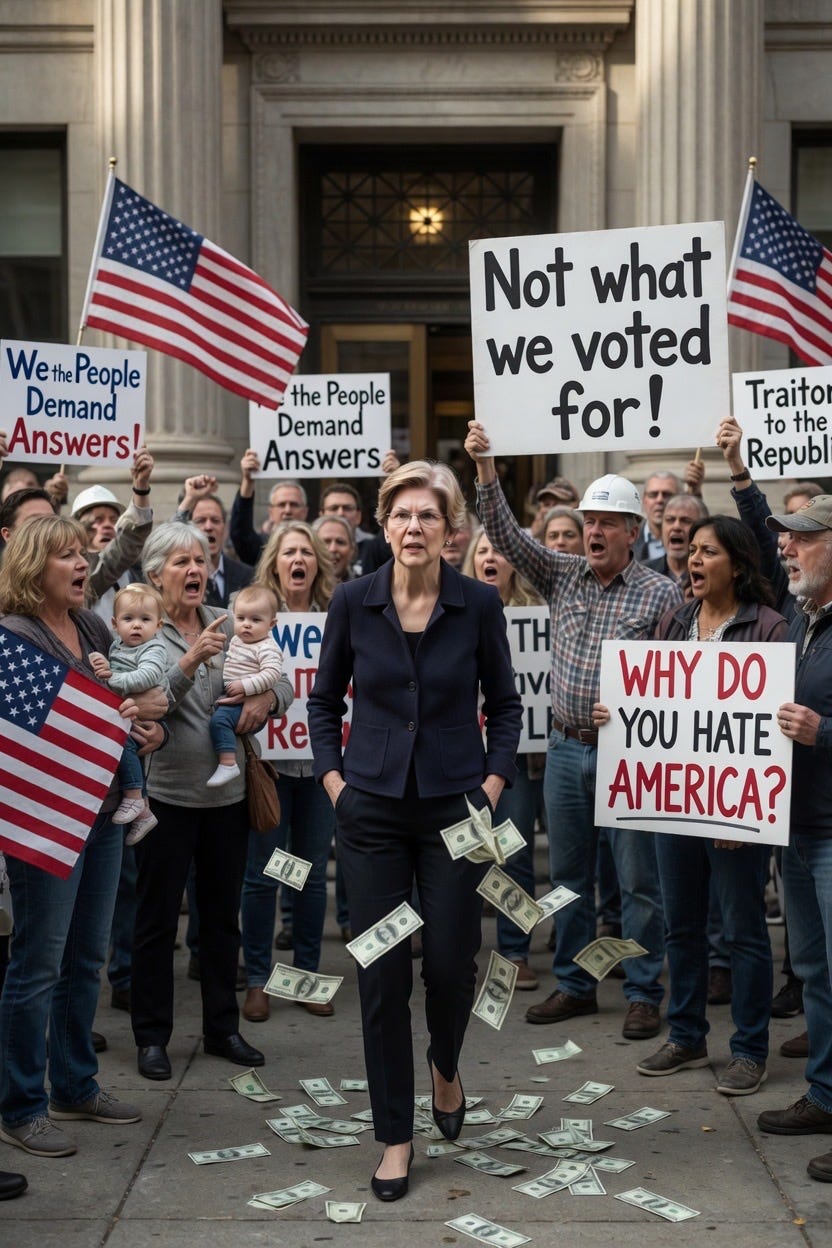
The leaked amendment roster for the Digital Asset Market Clarity Act reveals a startling reality: a coordinated group of legacy politicians is actively attempting to crush public decentralized finance. Led by Senator Elizabeth Warren, this cartel has introduced dozens of hostile markups designed to make everyday participation in the digital asset economy illegal or technologically impossible.
They claim they are protecting voters from risky investments. But a review of public financial disclosures, campaign finance records, and the actual text of these amendments tells a very different story.
This is not consumer protection. This is a targeted assassination of a competing technology, designed to protect the massive profit margins of the traditional banking sector that funds their political careers.
Who Do They Really Work For?
The fundamental job description of a United States Senator is straightforward: they work for the voters. They are public servants elected to represent the best interests, financial prosperity, and liberties of the American people.
But looking at these amendments, you have to ask yourself a very simple question. Who is actually lobbying for this? Are everyday voters calling their Senate offices begging the government to ban them from earning five percent yield? Are working class citizens marching in the streets demanding that decentralized finance be made illegal?
Of course not. The average American wants higher returns, fewer fees, and more financial independence. The only people begging to stop retail crypto are the Wall Street middlemen terrified of becoming obsolete. It is a stark reminder that while these politicians are supposed to work for us, their legislative pens are being guided by the legacy institutions that fund their campaigns.
The Real Losers: The American Voter and Legitimate Tech
The amendments submitted by Senator Warren and her allies do not just punish bad actors; they deliberately target the most promising technological infrastructure in the world.
Look closely at the leaked roster. Line 79 explicitly shows Senator Warren introducing an amendment to "strike the grandfather clause." This clause was specifically designed to protect established, legitimate networks that have proven their utility over time. By stripping this protection, Warren is ensuring that foundational infrastructure projects like Chainlink the decentralized oracle network that secures billions of dollars in smart contracts and is actively partnering with the DTCC are thrown back into regulatory limbo.
Furthermore, look at Line 48. Senator Warren seeks to "strike Section 404, prohibiting the payment of yield or interest on stablecoins."
Who does this hurt? It hurts the average American voter. Traditional banks currently pay depositors pennies while reinvesting those deposits into Treasury bills yielding over four percent, pocketing the massive spread. Stablecoin issuers are finally attempting to pass those Treasury yields directly to the consumer. Warren is fighting to ensure that only the banking elite are allowed to profit from risk free government yields, explicitly banning the average voter from accessing those same financial products through digital dollars.
The Hypocrisy of Wealth
These politicians constantly position themselves as champions of the working class. But let us call a spade a spade: they are multimillionaires deeply entrenched in the legacy system they claim to regulate.
According to public financial disclosures filed with the Senate and independent wealth trackers like Forbes, Elizabeth Warren possesses a net worth estimated between eight million and twelve million dollars. She lives in a multi million dollar Cambridge property and earns a staggering income from book royalties and her government salary.
Senator Chris Van Hollen, who co sponsored multiple hostile amendments aiming to force impossible anti money laundering standards on decentralized software developers (Lines 29 and 32), currently sits in a Senate where the median net worth is over four million dollars.
These are not working class advocates trying to protect your wallet. These are incredibly wealthy individuals fighting to protect the financial monopolies that currently dominate the global economy.
Follow the Money: The Campaign Donors
Why are they fighting so hard to destroy public crypto? The answer is sitting in plain sight on public campaign finance trackers like OpenSecrets.
According to verifiable campaign finance records, the Securities and Investment sector and traditional commercial banks consistently rank among the top donors to the Democratic Senatorial Campaign Committee and individual lawmakers on the Banking Committee. Throughout her career, Senator Warren has received immense political backing from the very legacy institutions that stand to lose the most from decentralized technology. Wall Street makes billions of dollars acting as rent seeking middlemen, charging exorbitant fees for custody, clearing, and cross border payments. Public crypto networks threaten to automate those fees to zero.
The agenda is clear: Protect the donors. Warren and her allies are trying to regulate public crypto out of existence so their commercial banking donors do not have to compete with a superior, cheaper, and faster technology.
The Anti Trump Derangement
We must also address the glaring partisan reality of this sabotage. Because Donald Trump has publicly positioned himself as a pro crypto candidate, the partisan left has decided they must destroy the industry simply to oppose him.
The leaked roster confirms this pettiness. Look at Amendment 27, sponsored by Senator Andy Kim. The text explicitly demands the reestablishment of a cryptocurrency enforcement team, specifically noting it was "disbanded by the Trump administration."
This is not thoughtful, data driven financial policy. This is blind political revenge. They are willing to crush American innovation, drive thousands of developer jobs overseas, and prevent the average voter from accessing yield, simply because their political rival embraced the technology.
The voters deserve a financial system built on efficiency and inclusion, not a protection racket designed to enrich legacy banks and the multimillionaire politicians who serve them.