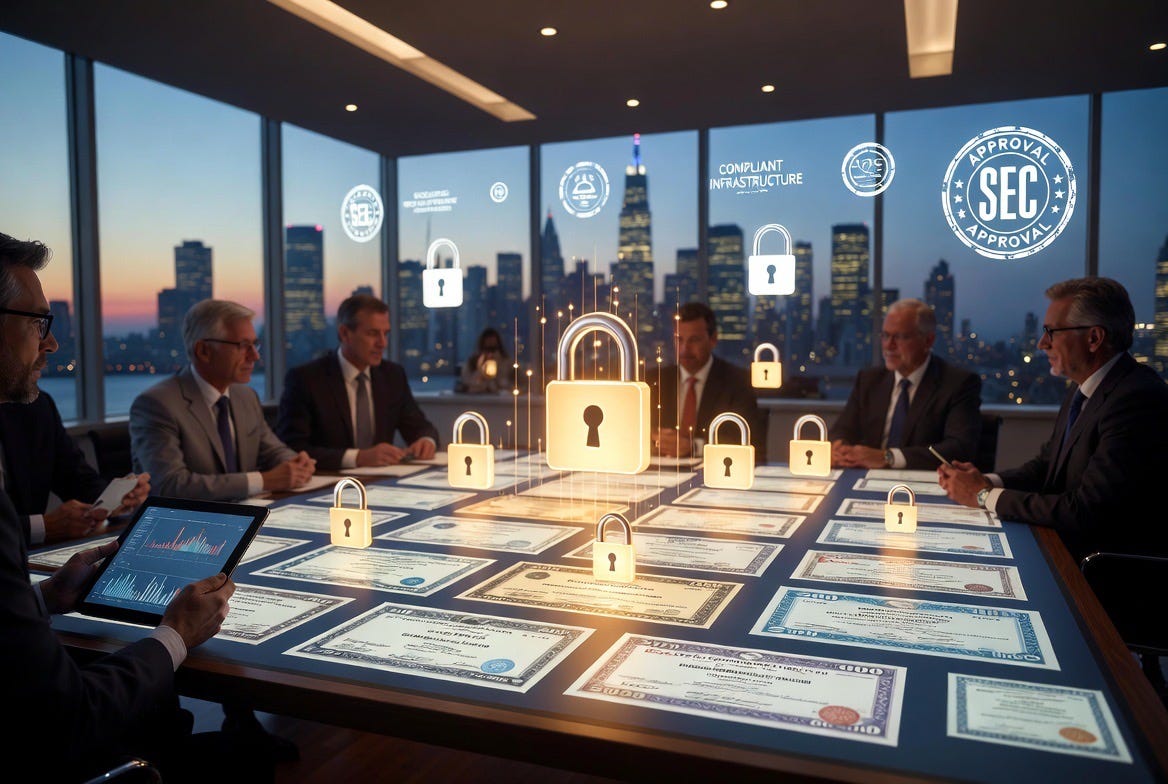
What is Tokenization?
Tokenization is the process of turning real-world assets like stocks, real estate, or bonds into digital tokens on a blockchain.
Think of it like this:
Instead of owning a paper stock certificate or holding shares in a brokerage account, you own a digital token that represents that stock. These tokens can be traded faster, 24/7, with lower costs, and even fractional ownership (e.g., buy 0.1 shares of Apple).
The big promise: Make traditional finance faster, more accessible, and more efficient using blockchain technology.
What Just Happened with the SEC?
This week, the SEC delayed a plan that would have let crypto exchanges and DeFi platforms quickly start trading tokenized U.S. stocks.
Many people in crypto panicked and called it a big regulatory setback. But that’s missing the point.
The SEC didn’t kill tokenization. They rejected a dangerous shortcut.
The Two Ways to Tokenize Stocks
1. The “Synthetic” or “Wrapped” Way (The Shortcut)
• Crypto platforms create their own digital token that tracks the price of a real stock (like Apple or Tesla).
• The actual company (Apple) isn’t involved at all.
• No official ownership, no real connection to the company’s records.
Problems with this:
• How do you vote at shareholder meetings?
• How does the company send dividends to anonymous blockchain wallets?
• Who actually owns what? No proper KYC (identity checks), which opens the door to bad actors, money laundering, or sanctioned countries owning U.S. company shares.
• It creates a “shadow market” for stocks outside normal rules.
2. The Compliant, Issuer-Led Way (The Proper Way)
• The actual company decides to tokenize its own shares.
• They work with a regulated company (like Securitize) that acts as an official, SEC-registered transfer agent.
• Every token is backed by real shares, with verified owners, proper compliance, and full legal rights (voting + dividends work correctly).
This is slower and more expensive upfront, but it’s safe and actually works within the existing financial system.
Why the SEC Drew the Line
SEC Commissioner Hester Peirce clarified: They support tokenized stocks, but not synthetic wrappers. They want real digital shares of the actual security, not fake versions created by third parties.
By delaying the shortcut, the SEC is forcing the industry to do tokenization the right way.
Why This is a Big Win for Securitize
While many crypto firms were trying to get around the rules, Securitize spent years building the compliant infrastructure:
• They are an official, SEC-registered transfer agent.
• In early May 2026, FINRA approved them to custody tokenized securities, underwrite tokenized IPOs, and settle trades on-chain.
• They connect real companies with blockchain in a fully legal way.
The SEC’s decision effectively clears the field for serious, regulated players like Securitize and slows down the risky Wild West approaches.
Bottom Line
This isn’t a setback for tokenization.
It’s a setback for cutting corners.
Real tokenization of U.S. stocks is still coming… but it will be done properly, with issuer consent, strong compliance, and actual legal ownership. That creates a much stronger, more sustainable future for blockchain in traditional finance.
The companies that did the hard work of following the rules (instead of asking for exemptions) are now in the best position.
For more like this subscribe here:
Disclaimer: This is for educational purposes only and not financial advice. Always do your own research.